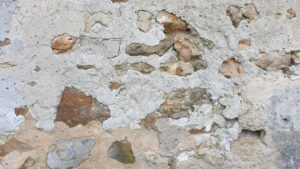
Across the rolling hills of South Devon, from the edges of Dartmoor down to the sheltered valleys of the South Hams, you will find one of the world’s most sustainable and enduring building materials: cob. Made from a mixture of local clay-based subsoil, straw, and water, cob was the primary building material for Devon’s rural cottages and farm buildings for centuries.
However, because cob is an unfired, organic material, it requires a specific type of care that modern building methods simply cannot provide. At Quoin & Oak Construction, we are proud to be among the few specialist heritage builders in Devon who still practice the “lost art” of cob work. Whether you own a thatched cottage in Ipplepen or a historic barn near Ashburton, understanding how to maintain and repair cob is essential for the survival of your home.
The “Wet Feet and a Good Hat” Rule
There is an old Devon saying that a cob house needs “a good hat and a pair of boots.” This refers to a solid roof (the hat) and a stone plinth (the boots). Cob is incredibly strong under compression, but its greatest enemy is standing water. If the roof leaks or the ground levels rise above the stone plinth, the cob can become saturated, losing its structural integrity and potentially leading to a “blow out” or collapse.
When we assess a cob structure, our first task is to ensure these two protective layers are functioning. We look at the thatch or slate, the guttering, and the exterior ground levels to ensure the “feet” and “hat” are keeping the earth walls dry.
Repairing the “Dough”: The Stitching Technique
You cannot repair a cob wall using bricks or concrete blocks. These materials are too rigid and don’t allow for the natural movement and breathability of the earth. When a cob wall develops a deep crack or a structural hole, we perform what is known as “cob stitching.”
We source local clay that matches the original soil as closely as possible and mix it with long-straw and sand. We then “stitch” the repair by treading the new cob into the void, often using wooden “pins” or stainless steel helical bars for extra reinforcement in structural areas. This ensures the repair becomes a homogeneous part of the wall, moving and breathing at the same rate as the original 300-year-old material.
The Danger of “Plastic” Renders
The most common cause of cob failure in the 21st century isn’t the weather; it’s modern building materials. In the mid-20th century, it became common to render cob houses in thick Portland cement and paint them with “plastic” masonry paints.
This is disastrous for cob. It seals the moisture inside the wall. Because the earth cannot breathe, the straw within the cob begins to rot, and the wall eventually turns back into mud behind its hard cement shell. We specialise in the sensitive removal of these suffocating modern renders, replacing them with traditional lime-and-hair plasters. Lime is the natural partner for cob; it is flexible enough to handle the wall’s movement and porous enough to let internal moisture evaporate harmlessly.
Shaping and Finishing Traditional Cob
Working with cob is a sculptural process. Unlike brickwork, which is defined by straight lines, cob has a soft, organic “batter” or curve. When we rebuild a section of a wall, we use traditional tools like a “cob parer” to trim the walls to their original profile.
Once the structural repairs are complete, we apply multiple coats of lime wash. This provides a sacrificial, breathable layer that protects the wall from the elements while giving the building that iconic, soft-edged Devon aesthetic. Because we handle everything from the initial structural “stitching” to the final decorative finish, we ensure the building’s health is protected at every stage.
Preserving Devon’s Architectural Soul
A cob house isn’t just a building; it’s a piece of the Devon landscape itself. To live in a cob home is to live in a structure that is naturally cool in the summer and incredibly warm in the winter due to its massive thermal bulk.
If you have noticed cracks in your cob walls, or if you suspect your home is “sweating” behind a cement render, it is vital to act quickly. Steve and the team bring nearly 25 years of experience to these delicate repairs, ensuring that your piece of Devon’s architectural soul remains standing for another few centuries.
If you need a specialist assessment of a cob building in South Devon, call Steve at Quoin & Oak Construction on 07528 095 320 or email quoinandoak@gmail.com.