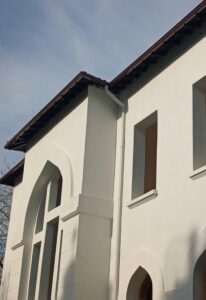
The concept of a “breathing” building might sound strange to those used to modern construction, but for anyone owning a period home in South Devon, it is the most important principle to understand. Whether you are living in a seaside villa in Torbay or a moorland cottage near Okehampton, the health of your home’s structure depends entirely on the movement of moisture.
At Quoin & Oak Construction, we spend a significant amount of time educating homeowners on why traditional lime plastering and rendering are not just aesthetic choices—they are essential for the survival of historic masonry and cob.
The Science of Breathability
Modern houses are built like sealed envelopes, using plastic membranes, cavity walls, and non-porous materials to keep water out. Heritage buildings, however, were designed to be “permeable.” They were built with solid walls that absorb a certain amount of moisture from the ground and the air, which then evaporates harmlessly from the surface.
This is what we mean by “breathability.” It isn’t about air blowing through cracks in the windows; it is about “vapour permeability.” Lime plaster and lime render act as the lungs of the building. They allow moisture to move through the wall and escape. When this process is working correctly, the walls stay dry, the timber frame remains rot-free, and the internal environment stays healthy.
The Destructive Nature of Gypsum and Cement
The biggest threat to Devon’s older buildings is the “modernisation” that took place over the last century. When traditional lime was replaced with gypsum plaster on the inside and Portland cement render on the outside, the “lungs” of these buildings were effectively sealed in plastic.
-
Trapped Moisture: Cement and gypsum are non-porous. When moisture enters the wall (through the ground or small cracks), it becomes trapped.
-
Structural Decay: In stone buildings, this trapped water causes the masonry to decay. In cob buildings, it is even more dangerous, as the damp earth can eventually lose its structural strength.
-
Health Issues: Trapped moisture leads to condensation and black mould on internal walls, which can cause respiratory issues for the people living inside.
The Benefits of Lime Rendering
When we apply a traditional lime render to the exterior of a property in Ashburton or Totnes, we are providing a “sacrificial” layer. Lime is softer than the stone or cob it covers. If the building moves slightly—as all old buildings do—the lime can flex without cracking. If it does crack, lime has “self-healing” properties, where free lime in the mortar reacts with rainwater and carbon dioxide to seal small fissures.
Most importantly, lime render is capillary-active. It pulls moisture out of the wall and allows it to evaporate. This “wicking” effect keeps the core of your walls dry, which actually improves the thermal performance of your home. A dry wall is a much better insulator than a damp one.
The Aesthetic and Functional Value of Lime Plaster
Inside the home, lime plaster offers a finish that modern materials simply cannot replicate. Because it is applied in multiple coats—often with goat or horse hair added for strength—it follows the natural contours of the building. This creates the soft, organic lines that give heritage homes their character.
Beyond looks, lime plaster regulates the internal climate. It absorbs excess humidity when you are cooking or showering and releases it when the air dries out. This natural regulation prevents the “damp feel” that many people associate with old houses, making the rooms feel fresher and more comfortable year-round.
A Specialist Approach from Quoin & Oak
Applying lime is a craft that requires patience and specific weather conditions. It takes longer to carbonise (set) than modern cement, which is why many general builders avoid it. At Quoin & Oak, we embrace this slow process because we know it is the only way to do the job properly.
As your Principal Contractor, Steve ensures that every stage of the plastering or rendering process is managed correctly. We source the right type of lime—whether it is a hydraulic lime for an exposed Dartmoor gable or a soft lime putty for an internal bedroom wall—and we ensure the finish is protected as it cures. Our “foundations to decoration” service means we stay until the final coat of breathable lime wash is applied, ensuring your home is fully protected and beautiful.
If your period property is suffering from damp or has been covered in modern cement, it might be time to let it breathe again. Call Steve at Quoin & Oak Construction on 07528 095 320 or email quoinandoak@gmail.com.