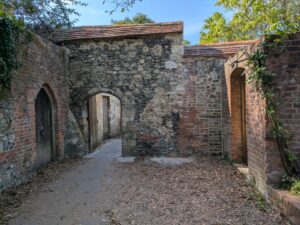
Pointing might look like a small detail, but on an old stone building, it plays an important role in how the whole wall manages moisture.
Many traditional properties were originally built using lime mortar. Over the years, some have been repointed with modern cement because it appears strong and weatherproof. Unfortunately, stronger does not always mean better—especially when working with softer, older stone.
What happens when cement is used?
Traditional stone walls naturally absorb and release small amounts of moisture. Lime mortar helps this moisture escape through the joints, where it can evaporate safely.
Cement pointing is generally harder and less permeable. Instead of allowing moisture to leave through the mortar joints, it can force it through the surrounding stone or trap it within the wall.
Over time, this may contribute to:
- Damp remaining within the wall
- Cracking around the mortar joints
- Salt deposits and staining
- Frost damage during cold weather
- The surface of the stone flaking or breaking away
In some cases, the cement remains perfectly intact while the stone around it gradually deteriorates. Historic England explains that modern impermeable materials can lock moisture into older walls and accelerate decay.
Why is lime mortar more suitable?
Lime mortar is usually softer, more flexible and more breathable than cement. It allows moisture to evaporate through the joints and can accommodate the small amount of natural movement found in older buildings.
It also acts as the sacrificial part of the wall. In simple terms, the mortar is designed to weather gradually so the valuable stonework does not have to. Replacing worn lime pointing is far better than replacing damaged historic stone.
Lime also tends to create a softer, more natural finish that complements the character of traditional masonry rather than making the joints appear overly hard or prominent.
Does all cement pointing need to be removed?
Not necessarily—and it should never be removed without first inspecting the wall.
Cutting cement out too aggressively can damage the edges and faces of the stone, sometimes causing more harm than leaving it temporarily in place. Historic England advises that only areas genuinely requiring repointing should normally be disturbed.
The existing mortar, type of stone, exposure to the weather and condition of the wall should all be considered before deciding on the right approach.
Choosing the correct lime mortar
Lime is not a one-size-fits-all material. The appropriate mortar depends on the building, the softness of the stone and how exposed the wall is.
A sheltered cottage may need a different mix from a chimney or a wall facing heavy Devon rain. The colour, texture and finish also matter if the new pointing is to blend sympathetically with the existing building.
You can learn more about the different types and uses of lime in our guide to the benefits of lime for older buildings.
Caring for an old stone property?
Before repointing a traditional wall, it is worth getting advice from someone who understands how historic masonry was designed to work.
At Quoin & Oak, we carry out heritage and listed building work using materials and techniques suited to the individual property. We can assess existing pointing, identify signs of moisture-related damage and recommend a repair that protects both the structure and its original character.
If you are concerned about cement pointing or deteriorating stonework, contact us for a friendly conversation and a free estimate.
quoinandoak@gmail.com
quoinandoakconstruction.co.uk
Part of South Devon Construction Group
South Devon Construction | Quoin & Oak | The Hard Landscaping Co. | Steve’s Turfing